Classifeds - FS, WTB, FT, WT Tips and Tricks for our Classic Babies Frequently Asked Questions E-Mail the WebMaster
Classic (1980 and Earlier) Pioneer Gear
Check out the Sample Unit Making the images we have look better! Links for Pioneer Classics Lovers Reviews of gear of interest to Pioneer classics lovers

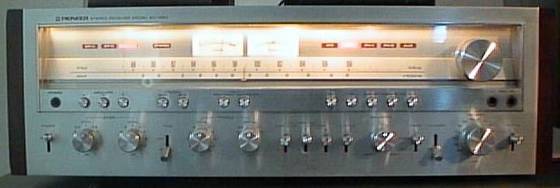
Pioneer Model SX-1250 Receiver

Pioneer Database Navigation Bar
Previous Receiver
Main Index
Next Receiver

Please feel free to copy and paste the following HTML code to link to this specific page in auctions or from your web pages:

<a href="http://www.classic-audio.com/pioneer/sx1250.html">Pioneer Model SX-1250 Details Page <i>on www.classic-audio.com</i></a>

It will look like this on your auction or page:

Pioneer Model SX-1250 Details Page on www.classic-audio.com

Visitors to your auction or page can click on it, and they'll be taken right to this web page!


Front View
Image Attribution: Unknown Ebay Auction
Date: March 13th, 2000


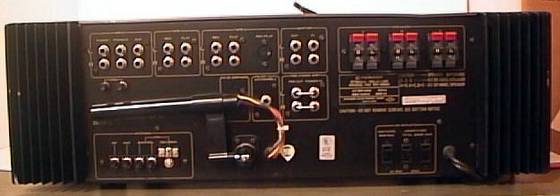
Rear View
Image Attribution: Unknown Ebay Auction
Date: March 13th, 2000

General
DescriptionReceiver
RarityScarce
Designed inJapan
Manufactured InJapan
Wood CaseWalnut Veneer
ChannelsTwo
IC Count6
FET Count5
Transistor Count86
Diode Count59
Speaker ConnectionsThree sets
AC SwitchYes

Physical
Width21 7/8
Height7 3/8
Depth18 3/4
Weight64 lbs

Amplifier
RMS Power Per Channel165 into 8 ohms, 200 into 4 ohms, 20 Hz to 20 KHz
Damping Factor @ Load Impedance30, 20 Hz to 20 KHz into 8 ohms
Total Harmonic Distortion (THD)0.1% at full rated power into 8 or 4 ohms, no more than 0.05% at 80 watts/channel
Frequency Response5 Hz to 100 KHz, + 0 dB, - 1 dB
Hum and Noise100 dB
Intermodulation Distortion (IM)No more than 0.1% at full rated power, no more than 0.05% at 80 watts/channel

FM Tuner
RF Sensitivity1.5 uV (8.7 dBF)
300 Ohm Binding PostsYes
75 Ohm Binding PostsYes
50 dB quieting sensitivity, Stereo35 uV, 36 dBF
50 dB quieting sensitivity, Mono2.1 uV, 11.5 dBF
THD, Mono0.1%
THD, Stereo0.2%
Signal to Noise Ratio, Mono80 dB at 65 dBF
Signal to Noise Ratio, Stereo74 dB at 65 dBF
Frequency Response30 Hz to 15 KHz, + 0.3 dB, -1 dB
Capture Ratio1.0 dB
IF Image Rejection110 dB
IF Rejection120 dB
Stereo Subcarrier Rejection74 dB
SCA Suppression74 dB
Alternate Channel Selectivity (wide or normal)83 dB
Spurious Rejection110 dB
AM Carrier Rejection60 dB
Stereo Separation at 1 kHz50 dB
Mono SwitchYes
Signal Strength MeterYes
Center Tuning MeterYes
Stereo LampYes
Multipath ListenYes
Muting Switch2.5 uV (13 dBF) fixed
Quadradial Output (FM Discriminator output, unequalized)Yes

AM Tuner
RF Sensitivity300 uV/meter or 15 uV with external antenna
Alternate Channel Selectivity40 dB
IF Rejection85 dB
Image Rejection65 dB
Signal to Noise Ratio55 dB

Preamplifier
Multiple Bass Adjustments+/- 10 dB at 100 Hz, and +/- 5 dB at 50 Hz
Multiple Treble Adjustments+/- 10 dB at 10 KHz, and +/- 5 dB at 20 KHz
Tone Control DefeatYes
High Filter8 KHz, 12 dB/octave
Low Filter30 Hz, 12 dB/octave
Gain ControlCalibrated detent knob
Loudness Contour+ 6 dB at 100 Hz, + 3 dB at 10 KHz
MonoYes
Muting-20 dB
BalanceYes
Number of Tape MonitorsTwo
Tape to Tape DubbingYes
Auxillary Input SourceYes
Phono Input SourceYes
Speaker Selection NomenclatureA, B, C


Have some additional information about the Model sx1250 Receiver? If so, I would sure appreciate it if you would EMAIL that to me. I'll add anything: What type of controls, specifications, number and type of AC outlets on the back... anything!

One thing, though... if you see some info and you believe it is incorrect, that is certainly possible. However, it does no good to tell me that "I don't think that's right". You need to tell me the correct information to replace it with. For instance, if I have that a particular model was available 1978-1979, and you believe that is wrong, then tell me the exact correct range and your source of information, rather than "I had one of those in 1976". Otherwise, I can't really change the database with any confidence.

The database currently contains "slots" for many AM Tuner, FM Tuner, Amplifier and Preamplifier specifications, as well as many of the controls and features Pioneer has made available on these units. You can check the Sample Unit to see all of the database slots. You might even be surprised at some of the slots that are available. However, if you come up with something that's not in the Pioneer Classics database, either a specification or a feature, I can add it in just a few minutes, along with specific details about that feature for any model(s) you know of. Don't be shy - tell me!

These listings can only be as good as the information in them. With your help, they will improve over time. Please accept my heartfelt thanks in advance for anything you can contribute.


Click to Return to the Master Indexes